
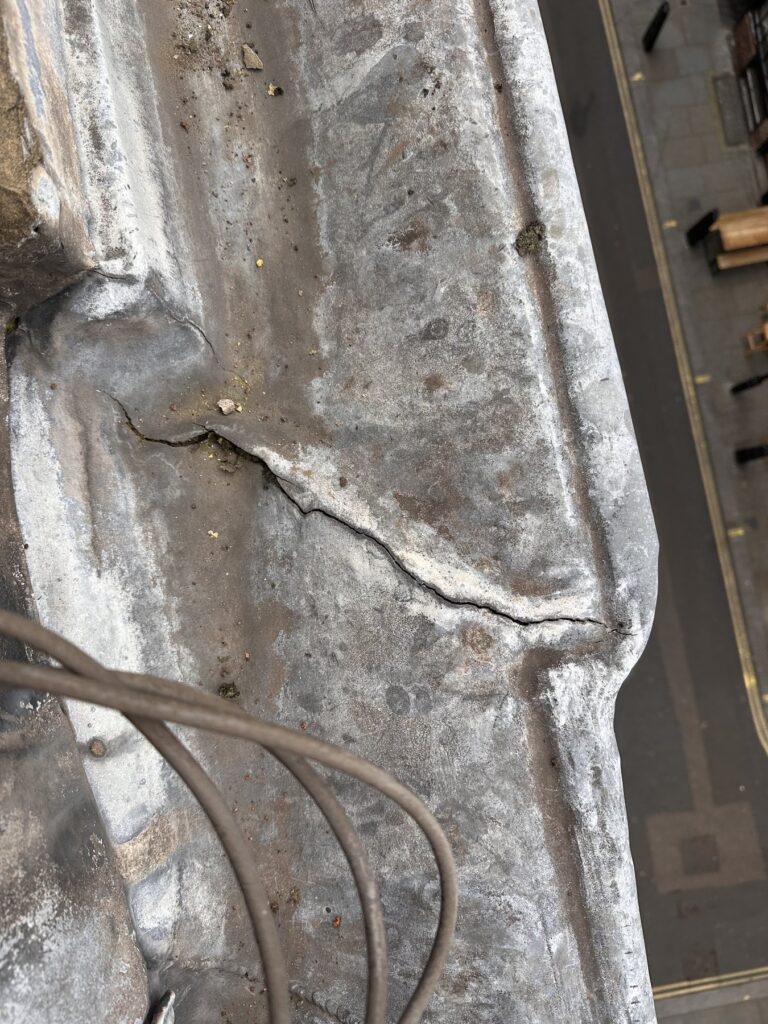
How to Identify Roof Leaks in Commercial Buildings
Commercial roof leaks London
Roof leaks in commercial buildings often start small, but they can quickly lead to internal damage, mould, ceiling staining, electrical risk, tenant disruption and higher repair costs.
For property managers, facilities managers, building owners, landlords, managing agents and commercial tenants, early roof leak detection is a practical part of building maintenance London clients cannot afford to ignore. This guide explains the signs of roof leaks, why flat roofs and high-level roof areas are vulnerable, and how Ropeguys can inspect difficult-access roofs safely using rope access across London and surrounding areas.

Why Commercial Roof Leaks Should Never Be Ignored
A small roof leak rarely stays small. Water can travel through insulation, deck layers, ceiling voids, cladding interfaces and service penetrations before it appears internally. By the time a tenant reports a stain, the source may be several metres away from the visible damage.
Commercial roof leaks London property teams deal with can affect offices, residential blocks, retail units, schools, hotels and industrial buildings. Leaks may disrupt occupants, damage stock or equipment, create slip hazards, affect electrical systems and trigger urgent complaints. Even where the internal mark looks minor, the external defect may be worsening after every period of heavy rain.
Early inspection helps reduce uncertainty. Ropeguys uses practical commercial maintenance knowledge and safe high-level access methods to inspect roof edges, gutters, outlets, flashings and difficult elevations where leaks often begin.
Common Early Warning Signs of a Roof Leak
Commercial roof leak detection usually begins with observations from inside the building. Property teams should record when the issue appears, whether it follows heavy rain, and whether it changes with wind direction or blocked drainage.
Water stains on ceilings
Brown, yellow or grey stains are common signs of roof leaks, especially near top-floor rooms, stair cores, plant areas and ceiling voids.
Damp patches on walls
Damp can track from roof edges, parapets or failed facade details before appearing lower down internally.
Mould or musty smell
Persistent moisture can create mould risk and unpleasant odours, particularly in poorly ventilated spaces.
Bubbling paint or plaster
Blistering finishes can indicate trapped moisture behind paint, plaster or lining materials.
Dripping during heavy rain
Active dripping after storms usually needs urgent inspection, especially near electrical fittings or occupied areas.
Blocked gutters or overflowing outlets
Blocked gutters can force water back towards roof details and cause leaks that appear unrelated at first.
Other warning signs include ponding water on flat roofs, damaged flashing, cracked joints, failed mastic, damaged roof penetrations and loose details around vents, plant supports, skylights or service entries.
Commercial Roof Leak Warning Signs Checklist
Use this checklist when reviewing a possible leak:
- Ceiling stains or spreading damp patches
- Musty smell or mould near the affected area
- Bubbling paint, peeling plaster or soft finishes
- Drips during heavy rain or wind-driven rain
- Standing water on flat roof areas
- Blocked gutters or overflowing rainwater outlets
- Damaged flashing, joints or roof penetrations
- Leaks that return after temporary internal repairs
Why Flat Roofs and High-Level Roof Areas Are More Vulnerable
Flat roofs, plant decks, parapet gutters and high-level roof areas are more vulnerable because water can sit around outlets, laps and penetrations. A leaking flat roof commercial property issue may be caused by blocked drainage, failed membranes, ageing joints, poor falls, damaged outlets or foot traffic around plant equipment.
High-level roofs can also be hard to inspect safely. A building manager may see internal staining but have no simple way to view the roof edge, gutter or parapet. This delay can allow the problem to continue through several rain events.
Regular inspection, especially after storms or seasonal debris build-up, helps identify small defects before they become larger commercial roof repair London projects.
How Rope Access Helps Identify Roof Leaks Safely
Rope access roof inspection London services are useful where conventional access is difficult, expensive or disruptive. Instead of erecting scaffolding for an initial investigation, trained technicians can use suitable anchor points, temporary rope systems or existing building access systems to reach high-level areas safely.
Rope access is particularly effective for checking roof edges, parapets, gutters, outlets, downpipes, facade interfaces and isolated areas where water may be entering. It can also reduce disruption to tenants, entrances and public areas because the access footprint is usually smaller than scaffold or mobile platforms.

What Ropeguys Checks During a Roof Leak Inspection
During a roof leak inspection, Ropeguys looks for practical evidence rather than guessing from the ground. Checks may include gutters, outlets, downpipes, roof membranes, parapet details, flashing, leadwork, mastic joints, service penetrations, rooflights, cladding junctions and staining patterns on the external facade.
Where possible, our technicians can provide photographs showing the likely source, the condition of the surrounding area and any immediate maintenance concerns. This helps property managers decide whether they need cleaning, monitoring, temporary works or a more planned commercial roof repair London solution.
For related drainage issues, Ropeguys can also support gutter cleaning London services and wider rope access building maintenance.
When to Arrange a Roof Inspection
Arrange an inspection when a leak appears for the first time, returns after internal decoration, worsens during heavy rain, appears near electrical systems, affects a tenant space, or coincides with overflowing gutters. It is also sensible to inspect after storms, before winter, after roof works by other contractors, or when taking on a new commercial property.
Commercial tenants should report leaks promptly to building management and avoid assuming the source is directly above the stain. Property managers should record photographs, dates, weather conditions and affected rooms. That information helps contractors narrow the likely cause.
Why Early Detection Saves Money
Early detection helps avoid repeated call-outs, internal redecoration, ceiling repairs, tenant disruption and wider fabric damage. A blocked outlet or failed joint may be relatively simple to address when found early, but expensive if water continues entering the building for months.
Rope access can make early investigation more cost-effective because it reduces the need for scaffold during the diagnostic stage. The client receives practical information before committing to a larger repair programme. This is especially valuable for managing agents who need evidence for landlords, directors, insurers or leaseholders.
Ropeguys also provides related commercial access services, including rope access window cleaning London, which can be coordinated with inspection or maintenance where appropriate.
Call Ropeguys for Commercial Roof Leak Inspection in London
Ropeguys LTD supports property managers, facilities managers, building owners and managing agents with safe high-level inspections and practical commercial maintenance advice. Our rope access experience helps us inspect difficult-access areas while keeping disruption low for occupied London buildings.
We do not promise to diagnose every leak from one visit, because water can travel through complex building fabric. What we do provide is careful inspection, photographic evidence where appropriate and clear next-step recommendations based on what is visible and accessible.
Practical Next Steps for Property Managers
When a possible leak is reported, the first step is to protect the occupied area and record the evidence. Take photographs of staining, note the date and weather conditions, identify the room or tenancy affected, and check whether any electrical fittings, data cabling, ceiling tiles or stored materials are at risk. This information helps a roof inspection team understand whether the issue is likely to be rainfall-related, drainage-related or connected to a specific roof detail.
Property managers should avoid repeated internal repairs before the external cause is understood. Painting over a stain or replacing ceiling tiles may make the area look better temporarily, but it does not address the water path. A practical inspection should consider roof drainage, gutters, outlets, parapets, flashing, roof penetrations and facade junctions. Rope access can help Ropeguys reach these high-level areas safely and provide useful photographic evidence for maintenance decisions.
Frequently Asked Questions
What are the first signs of a commercial roof leak?
Early signs include ceiling stains, damp patches, bubbling paint, musty smells, mould, active dripping during heavy rain and reports of water near top-floor rooms or roof-level areas.
Can rope access be used to inspect leaking roofs?
Yes. Rope access can be used to inspect roof edges, gutters, parapets, outlets, downpipes and facade interfaces where safe anchors and access planning are available.
How often should commercial roofs be inspected?
Many commercial roofs should be inspected at least once or twice a year, and after severe weather, drainage problems or reported leaks. Higher-risk buildings may need more frequent checks.
Are flat roofs more likely to leak?
Flat roofs can be more vulnerable because water may pond around outlets, laps, joints and penetrations. Good drainage and regular inspection are important for reducing leak risk.
Can blocked gutters cause roof leaks?
Yes. Blocked gutters and rainwater outlets can cause water to overflow, back up into roof details or track into the building through joints, parapets or weak points.
Do Ropeguys provide roof leak inspections in London?
Yes. Ropeguys provides commercial roof leak inspection and high-level building inspection services in London and surrounding areas, using rope access where suitable.
Arrange a Safe High-Level Roof Leak Inspection
If you manage a commercial building in London and suspect a roof leak, contact Ropeguys for a safe high-level inspection and practical maintenance advice.