01
1. Initial information and objectives
Send the address or postcode, building photographs and the reason for the visit. Explain whether the requirement is routine condition checking, planned maintenance, storm follow-up or investigation of a visible concern.
If there is internal damp, include photographs, approximate dates, weather conditions and any previous repairs. This information helps us distinguish a general inspection from a dedicated leak investigation.
02
2. Access and scope review
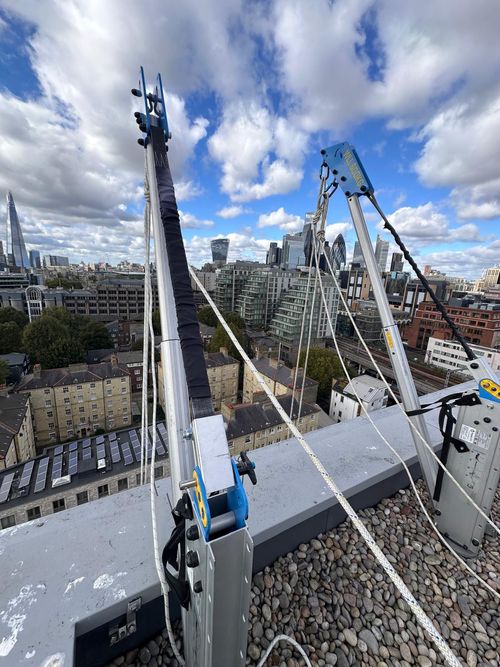
We review roof access, potential rope-system locations, work positioning, public areas, neighbouring property and building use. Some sites can be assessed from clear information; others require a survey.
The quotation defines the areas included, the type of observations, any maintenance allowance and important exclusions. This prevents a general request to “check the roof” from creating unclear expectations.
03
3. Project-specific planning
The team coordinates keys, permits, resident or tenant communication, working hours and controlled areas. Task planning considers the roof arrangement, tools, material handling, weather and rescue requirements.
Where the client requires project documentation, the exact requirements should be confirmed before work. Ropeguys does not present generic paperwork as a substitute for project-specific planning.
04
4. Controlled close inspection
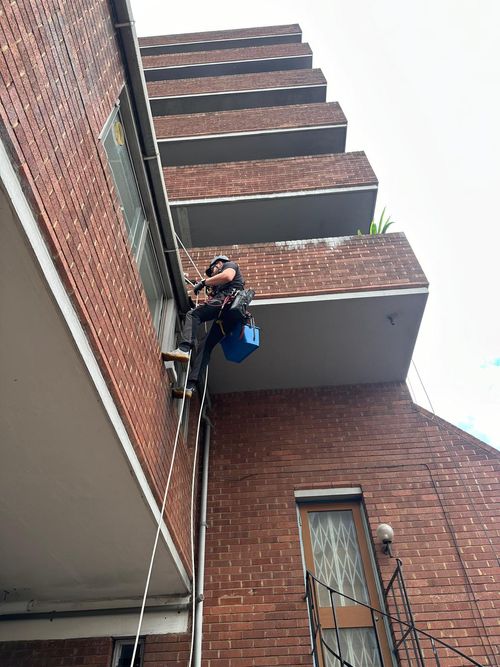
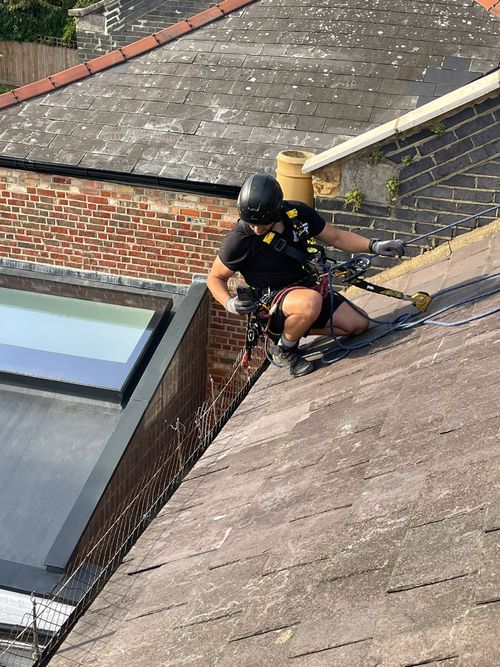
Technicians access the agreed areas and record visible condition. The sequence may include general context photographs followed by close images of joints, flashings, outlets, surfaces and defects.
We avoid overstating visual evidence. For example, staining may show that water has travelled over a surface, but it does not by itself prove the original entry point.
05
5. Agreed maintenance
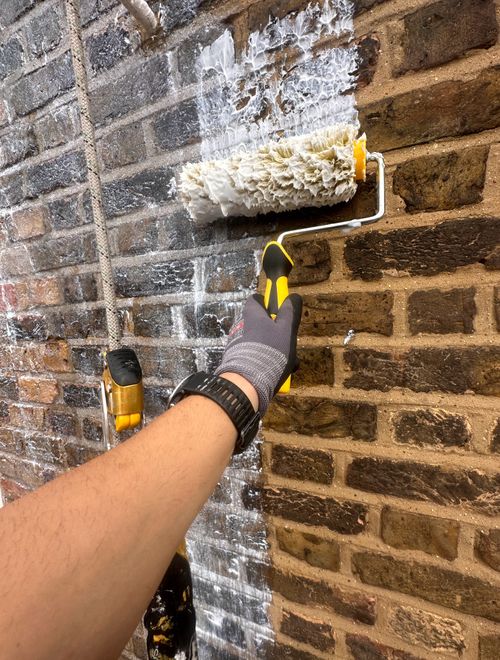
Suitable maintenance can be completed when it is included in the quotation and conditions permit. Examples may include clearing an outlet, removing local debris or completing a clearly specified minor repair.
Wind, rain, temperature and surface moisture affect both access and material performance. Work may be postponed if a safe or durable result cannot be achieved.
06
6. Findings and completion evidence
Where agreed, Ropeguys supplies photographs and a practical summary of visible findings. Items can be separated into completed work, observations requiring monitoring and matters needing further specialist advice.
The output is written for useful decision-making, without describing a visual inspection as an engineering or comprehensive roof survey.
07
7. Future maintenance planning
For repeat clients, the agreed inspection points can form a consistent baseline. Comparing later photographs can help show whether joints, corrosion, staining or drainage conditions have changed.
The interval is decided with reference to roof type, exposure, history and client responsibilities. There is no universal schedule suitable for every London building.