
Roof Leak Investigation London
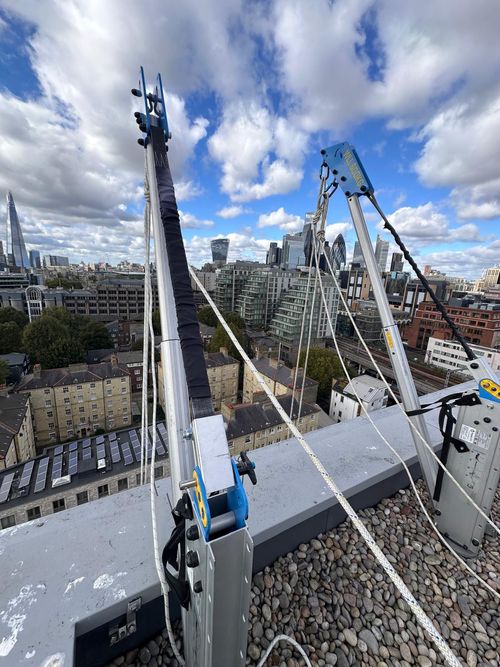
Ropeguys provides roof leak investigation in London for commercial buildings, apartment blocks, managed properties and other premises with active or suspected water ingress from high-level roof areas. Using planned rope access, our technicians can reach roof edges, parapets, flashings, gutters, outlets, penetrations and difficult junctions that may be unsafe or impractical to inspect from ground level.
This service is for clients who already have evidence of a leak, such as internal staining, dripping, damp patches, repeated overflow marks or recurring water entry after rain. It is different from a routine roof inspection and maintenance visit, which is mainly preventive. A leak investigation starts with symptoms and works back toward possible entry routes.
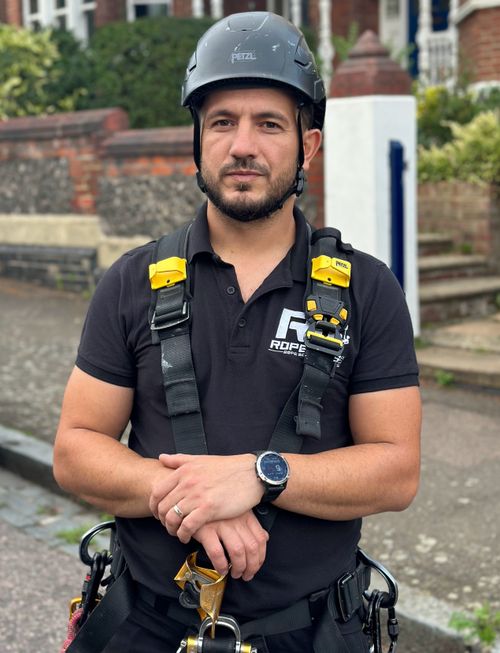
Ropeguys is supervised by experienced IRATA Level 3 personnel. Ionut Caimac has 18 years of published industry experience and Zoltan Abraham has 15 years. We combine close access, practical photographic evidence and honest guidance about what can be concluded visually, what may need staged testing and when a roofing specialist, surveyor, engineer or manufacturer should be involved.
What Is a Roof Leak Investigation?
A roof leak investigation is a targeted inspection intended to understand possible water-entry routes. It reviews symptoms inside the building, visible external defects and the relationship between roofs, gutters, parapets, flashings, penetrations, masonry, sealants and facade interfaces.
Water rarely behaves politely. It can enter through one point, travel behind finishes, follow structural members or insulation layers, then appear indoors some distance away. A damp ceiling below a roof does not automatically prove that the defect is directly above the stain.
A direct answer for property managers
Roof leak investigation by rope access means trained technicians use rope systems to inspect difficult high-level roof and facade details associated with water ingress. The purpose is to gather close visual evidence, identify likely defects within the agreed scope and help the client decide whether a local repair, staged testing or specialist specification is needed.
Investigation versus routine roof inspection
A routine roof inspection records general condition and planned maintenance issues. A leak investigation is more focused: it begins with a reported symptom and checks the most relevant external routes. The output should help explain possible causes, not simply list every visible roof item.
Investigation versus emergency repair
An investigation is not the same as an emergency callout or a guaranteed leak stop. Active water entry may require temporary protection, internal controls or a roofing contractor before a full diagnosis is possible. Ropeguys can advise what is practical within the agreed access scope and weather conditions.
Why leaks can be hard to trace
Water can enter through open laps, cracked mortar, failed sealant, blocked outlets, displaced flashings, damaged membranes, poorly sealed penetrations or hidden construction gaps. Wind-driven rain can also make a defect appear only in certain weather. A leak that appears after heavy rain may have a different cause from one that appears after wind from a specific direction.
Evidence matters before repair
Guessing at a repair can create repeat visits and unnecessary cost. A visible crack might be relevant, but the actual route may be an outlet, parapet joint or flashing nearby. Ropeguys uses close images and practical observations to separate likely causes from unrelated defects.
When Is Roof Leak Investigation Necessary?
Leak investigation is useful when the building has symptoms that need explanation before repair money is spent. It is especially relevant when the suspected area is high, difficult to reach or surrounded by several possible water-entry routes.
Consider a roof leak investigation when:
- water staining appears on ceilings or upper walls;
- dripping happens during or after rain;
- damp recurs after previous local repairs;
- overflow marks appear below roof drainage;
- residents report leaks in top-floor rooms;
- parapet, coping or roof-edge joints look open;
- gutters or outlets repeatedly block or overflow;
- roof penetrations have aged or disturbed seals;
- water appears after wind-driven rain;
- damp appears near window heads, balconies or facade junctions;
- internal contractors cannot confirm the external source;
- insurance, management or repair planning needs better evidence;
- a specialist needs close photographs before specifying work.
Recurring damp after previous repairs
If a leak returns after patching, the earlier repair may have addressed a symptom rather than the source. It may also have failed because the substrate, weather conditions or material compatibility were not suitable.
Leaks after storms or wind-driven rain
Severe weather can expose weak roof edges, lifted flashings, displaced copings and poorly sealed penetrations. Some defects only leak when rain is driven sideways or when gutters are overwhelmed.
Staining below gutters and outlets
Overflow staining can suggest blockage, poor falls, failed joints, undersized drainage or an outlet defect. Debris removal belongs within gutter cleaning when the issue is mainly blockage; failed joints, brackets and damaged sections belong within the planned Gutter Repair page.
Top-floor leaks in apartment blocks
Managed residential buildings often include parapets, balconies, recessed roofs and internal courtyards. The leak may involve a roof detail, facade junction, sealant bead, masonry joint or drainage route rather than a single obvious hole.
Water near windows or facade interfaces
Water entering near a window head or reveal may come from roof drainage above, failed perimeter mastic, facade movement joints, cracked masonry or concealed construction. If smaller perimeter beads are the concern, see mastic and silicone replacement. Larger facade joints are covered by sealant replacement.
Roof Leak Investigation Services
The investigation scope is agreed before access begins. It may focus on one leak location or a defined roof area associated with recurring water ingress.
Roof-edge and parapet leak checks
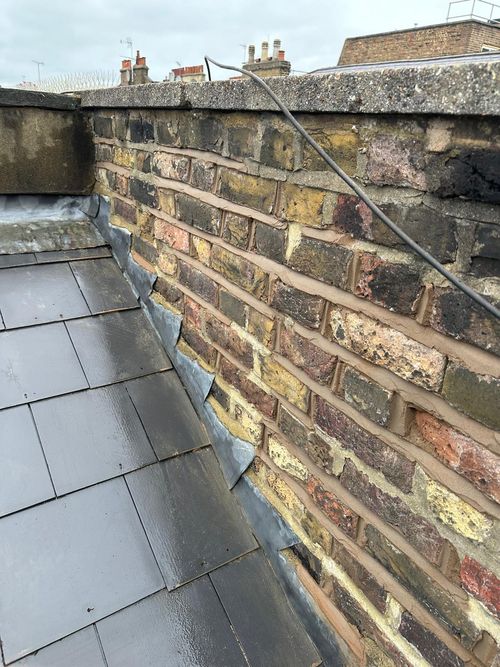
Parapets, copings and roof edges are highly exposed. Open joints, cracked mortar, failed sealant, displaced caps and staining can all be relevant. Close access helps show whether a visible defect is isolated or part of a wider pattern.
Flashing and upstand inspection
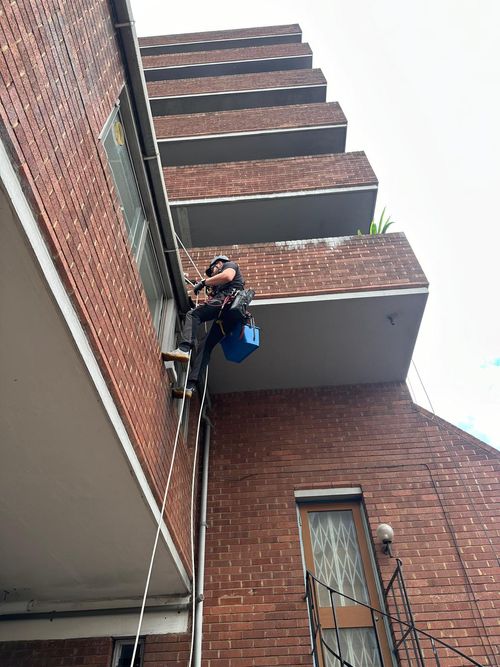
Flashings around walls, roof upstands and changes in level can lift, split, detach or become poorly integrated with later alterations. Ropeguys can record visible condition and identify where specialist repair may be needed.
Gutter, outlet and drainage investigation
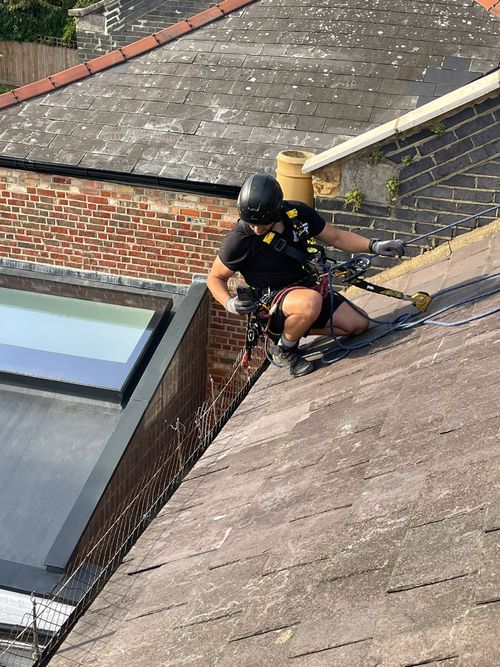
Blocked or damaged drainage can cause overflow, ponding and water tracking into other details. We can inspect suitable gutters, outlets, hoppers and channels, and separate debris issues from repair issues where visible.
Penetrations and service interfaces
Pipes, ducts, vents, cable routes and fixings can create water-entry points. Where mechanical, electrical or specialist services are involved, responsibilities must be clear before any repair work is attempted.
Membrane and surface defect observations
Visible splits, punctures, blisters, open laps, failed coatings, ponding and local impact damage can be documented. Concealed layers and system warranties may require a roofing specialist or manufacturer.
Sealant and mastic failure review
Aged sealants can crack, harden or detach. Ropeguys can identify visible failure and advise whether replacement appears relevant, while avoiding the assumption that every leak is solved by a new bead.
Masonry and mortar at roof level
High-level brickwork, parapets and mortar joints can admit water or contribute to damp paths. Failed mortar is covered by brick repointing, while damaged bricks are covered by rope access brick repair.
Photographic evidence for decision-making
Where agreed, photographs can show the suspected route, nearby defects, roof context and areas that appear sound. This can help managing agents, freeholders, surveyors and repair contractors agree the next step.
Advantages of Rope Access for Leak Investigation
Rope access can be a practical way to inspect suspected leak points on buildings where scaffold would be slow, costly or difficult to position. It is not automatically the answer for every roof, but it can be especially useful for focused high-level evidence gathering.
Close visual access
Ground photographs and drone images can show location, but close access allows technicians to view joint edges, lifted details, cracked materials and blocked outlets from the work position.
Faster focused inspection
For selected defects, rope access may allow a targeted inspection without scaffolding the full elevation. This can be useful when the client needs evidence before approving a larger repair scope.
Reduced disruption
Occupied buildings, narrow streets, courtyards and entrances can make large access systems difficult. Rope access still requires controlled zones below, but the ground footprint may be smaller.
Useful photographic records
Images from the exact work position can support internal reports, repair quotations and conversations with consultants or roofing contractors.
Investigation before repair
Rope access can help separate likely water-entry routes from unrelated visible defects. This is valuable when several trades have already suggested different causes.
When another access method is better
Scaffold, powered access or a roofing platform may be more suitable for extensive testing, heavy materials, large replacement works, fragile roofs or projects requiring continuous access. Ropeguys will say so when the task needs it.
Our Roof Leak Investigation Process
1. Symptom information
Send the postcode, photographs of internal staining, the affected room or area, dates of leakage, weather conditions and any previous repairs. If the leak occurs only during wind-driven rain or after long storms, include that detail.
2. Building and access review
We review roof layout, possible rope arrangements, roof access, elevations, public areas, neighbouring property and the suspected leak zone. The aim is to decide whether rope access is practical and what can be inspected.
3. Scope definition
The quotation identifies the areas to be checked, the evidence to be recorded and whether any minor work is included. It also explains important limits, such as concealed construction, inaccessible voids or defects requiring specialist testing.
4. Project-specific planning
Keys, permits, resident or tenant communication, working hours, exclusion areas, tools, weather and rescue arrangements are coordinated before mobilisation.
5. External close inspection
Technicians inspect the agreed roof, parapet, drainage and interface details. Photographs can include both wider context and close images of suspected defects.
6. Evidence-led observations
Findings are explained as visible evidence, likely causes or limitations. A stain, crack or open joint may be relevant, but we avoid presenting visual clues as certainty when water testing or intrusive investigation would be needed.
7. Suitable minor action where agreed
If a small practical item is clearly included in the scope and conditions are suitable, it may be completed during the visit. Examples might include clearing an accessible outlet or addressing a defined local detail. Wider repair work requires a separate agreed scope.
8. Recommended next step
The output may recommend monitoring, local repair, drainage work, sealant replacement, masonry repair, specialist roof specification or further testing. The goal is to give the client a better decision, not a vague instruction to “repair roof”.
Why Choose Ropeguys for Roof Leak Investigation?
Experienced IRATA Level 3 supervision
Ropeguys publicly identifies Ionut Caimac and Zoltan Abraham as IRATA Level 3 Supervisors with 18 and 15 years of stated experience.
Leak-focused scope
This page is written around water ingress, symptoms and tracing likely routes. It is deliberately separate from routine roof inspection and planned maintenance.
Related high-level maintenance services
Ropeguys also works with roof inspection and maintenance, sealant replacement, mastic and silicone replacement and rope access maintenance. That context helps identify when the leak is linked to drainage, masonry, sealant, roof edges or other high-level details.
Honest limits
We distinguish close visual investigation from intrusive testing, engineering assessment and manufacturer warranty inspection. Clear limits protect the client from false certainty.
Genuine project imagery
The website uses genuine Ropeguys high-level roof and facade photographs without inventing client names, insurance claims or unsupported outcomes.
Practical communication
Managing agents and owners often need evidence they can share. Clear images and concise observations help turn a frustrating leak into a defined next action.
Industries and Buildings We Serve
Apartment blocks
Top-floor leaks, balcony interfaces, parapets and internal courtyard roofs can be difficult to inspect from normal access routes.
Commercial offices
Office buildings may have rooftop plant, facade junctions, roof edges and service penetrations that require coordinated access.
Hotels and hospitality premises
Leak investigation can be planned around guest areas, entrances and operational needs where the building arrangement allows.
Retail and mixed-use buildings
Water ingress can affect shops, flats, offices and shared service areas. Busy frontages require careful control of public routes.
Schools and public premises
Working periods, safeguarding arrangements and site procedures should be identified before quotation.
Healthcare and sensitive occupied sites
Hospitals, clinics and other sensitive premises may require careful planning around access, noise, public routes and operational restrictions.
Industrial and logistics properties
Large roofs may require specialist roofing contractors, but rope access can still be useful for selected edges, gutters, outlets and interfaces.
Traditional masonry buildings
Parapet brickwork, mortar joints, stone details and old flashings can all influence water ingress. These buildings may require careful separation of roof defects from masonry defects.
Genuine Ropeguys Roof Leak Access Examples
These examples use genuine Ropeguys project imagery. Exact addresses and client identities are not published.
Roof-edge and parapet investigation
Ropeguys imagery shows technicians positioned at exposed roof-edge and parapet locations. This type of close access helps record open joints, lifted details, staining and surrounding conditions.
Drainage and outlet checks
High-level drainage images show why blocked outlets, gutter debris and failed joints must be considered during leak diagnosis. Clearing debris and repairing drainage are separate scopes.
Interface inspection around glazing and facades
Project photographs show areas where roofs, windows, panels, masonry and sealants meet. Leaks in these zones often need careful tracing because the visible internal symptom may not align with the external entry point.
What photographs can and cannot prove
Photographs can show visible defects and support a likely route. They cannot prove concealed construction, hidden membrane condition or guaranteed watertightness without the right investigation method.
Roof Leak Investigation Areas Covered in London
Ropeguys is based at 10 Florence Road, Kingston upon Thames, KT2 6JW, and works throughout Greater London.
Areas include Kingston, Richmond, Twickenham, Wimbledon, Putney, Wandsworth, Chelsea, Kensington, Hammersmith, Fulham, Westminster, Lambeth, Southwark, Croydon, Ealing, Brent, Camden, Islington, Hackney, Tower Hamlets and Greenwich.
Learn more about Ropeguys, visit Rope Access London or review the wider services hub.
Roof Leak Investigation Frequently Asked Questions
What is roof leak investigation?
It is a targeted inspection that reviews leak symptoms and visible external details to identify likely water-entry routes.
Can rope access be used to investigate roof leaks?
Yes, where safe rope arrangements can be established and the suspected roof or facade details are suitable for close inspection.
Is this the same as a routine roof inspection?
No. Routine inspection is preventive. Leak investigation starts with active or suspected water ingress and follows the evidence.
Can you guarantee the source of a leak?
No visual inspection can guarantee every concealed water path. We explain visible evidence, likely causes and limitations.
Can you fix the leak during the investigation?
Suitable minor work can be included if agreed in advance and conditions permit. Wider repairs normally need a separate scope.
Why does water appear away from the roof defect?
Water can travel behind finishes, along structures or within roof build-ups before appearing indoors.
Do you investigate leaks around parapets?
Yes, parapets, copings, roof edges and high-level masonry interfaces can be included in the agreed scope.
Do blocked gutters cause roof leaks?
Blocked or defective drainage can contribute to overflow, ponding and water tracking. The exact cause still needs evidence.
Do you use water testing?
Water testing may be useful on some projects, but it must be planned carefully and is not assumed for every investigation.
Do you provide photographs?
Photographic records can be included where practical and agreed.
Can you inspect after heavy rain?
Often, yes, but access and safety depend on weather, wind, roof condition and site controls.
What information should I send first?
Send the postcode, internal leak photos, external building photos, dates of leakage, weather pattern and previous repair history.
Can you work on occupied apartment blocks?
Yes, subject to access, resident communication, exclusion zones and building management arrangements.
Are projects supervised by IRATA Level 3 personnel?
Ropeguys publicly identifies Ionut Caimac and Zoltan Abraham as experienced IRATA Level 3 Supervisors.
How do I request a quotation?
Call 07909 983036, email info@ropeguys.co.uk, send a WhatsApp message or complete the form below.
Request a Roof Leak Investigation Quote
Send the property postcode, photographs of the leak symptoms, roof or elevation photographs, approximate height and any previous repair history.
We will assess whether rope access is appropriate and provide a written scope for the investigation, evidence and next-step guidance.
Tell us about the building
Include the postcode, approximate height and photographs where possible.