
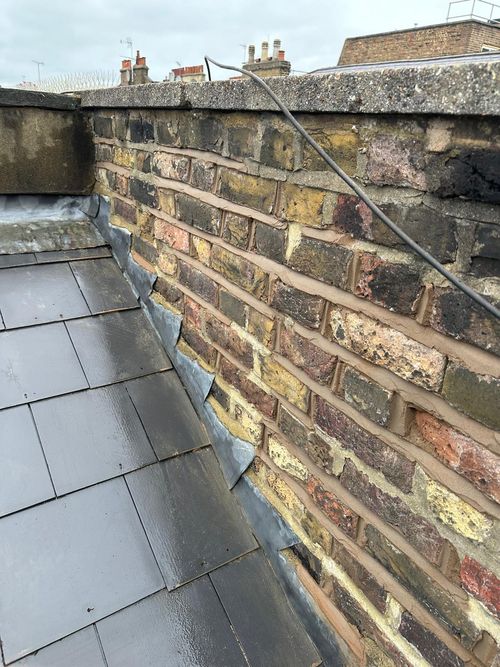
Façade movement joints
Movement joints between panels, masonry sections and construction elements need a flexible seal compatible with the expected movement and substrate.
Ropeguys provides sealant replacement in London for commercial buildings, apartment blocks and managed properties with failed high-level façade and window joints. Using planned rope access, our technicians can reach movement joints, panel interfaces, window perimeters, parapet details and external penetrations where scaffold may be disproportionate to a focused replacement programme.
Effective sealant replacement involves more than applying new material over an old joint. Defective sealant normally needs to be removed, joint faces prepared and a compatible replacement installed to an appropriate shape and depth. The substrate, movement, exposure and existing joint design all influence the result.
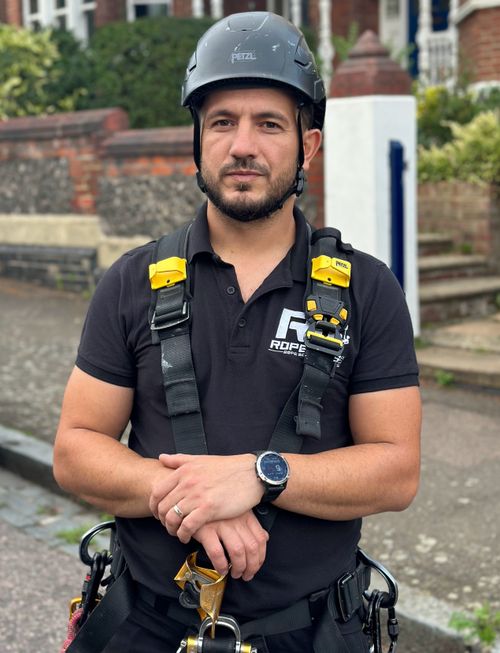
Ropeguys is supervised by experienced IRATA Level 3 personnel. Ionut Caimac has 18 years of published industry experience and Zoltan Abraham has 15 years. We combine difficult access with practical external building maintenance and clearly identify when specialist design, laboratory testing or wider façade investigation is required.
External sealant replacement is the controlled removal of failed joint material and installation of a compatible new seal. Sealants are used around windows, façade panels, masonry interfaces, penetrations, copings and construction joints to accommodate movement and resist weather.
They have a limited service life. Ultraviolet exposure, temperature change, moisture, joint movement, contamination and poor earlier preparation can cause cracking, hardening or loss of adhesion.
Rope access sealant replacement allows technicians to renew failed high-level weather joints without automatically scaffolding the whole elevation. It is suitable for defined external joints where safe positioning, substrate preparation and correct material application are practical.
Applying a new bead across old, contaminated or detached material may hide failure without restoring bond. Proper replacement usually means removing the defective sealant, cleaning the joint faces and installing the new system to the agreed detail.
There are situations where a designed overlay system may be specified, but this should not be assumed as the default.
The terms overlap in everyday language. This page targets façade movement joints, construction interfaces and larger external weather seals. The planned Mastic & Silicone Replacement page will focus on smaller perimeter, glazing and finishing applications.
A failed joint can admit water, but leaks can also originate from roofs, flashings, masonry, drainage or concealed façade construction. Replacement should follow evidence rather than guesswork.
A sealant bead must have enough surface contact to adhere while remaining flexible through its centre. A joint that is too thin, too deep or bonded on three sides may not move as intended. Backing rod or another bond-breaking detail can help control depth and prevent unwanted adhesion to the rear of the joint.
The correct dimensions depend on the joint, material and expected movement. Ropeguys follows the agreed specification and does not treat a neat-looking surface bead as proof that the concealed geometry is correct.
Glass, aluminium, coated metal, concrete, masonry, stone and plastics can require different preparation and products. Residues from old silicone, cleaning chemicals, coatings or mastics may affect adhesion. Some natural stones can also be stained by unsuitable sealants.
Where the substrate or previous product is uncertain, a trial, adhesion testing or manufacturer advice may be appropriate before a wider replacement programme.
Typical warning signs include:
Adhesive failure occurs when sealant separates from the substrate. Causes can include contamination, unsuitable primer, movement beyond capacity or incompatible material.
Cohesive failure is splitting within the sealant itself. Age, excessive movement, incorrect joint dimensions and material selection can contribute.
Old material can lose flexibility and pull away from joint edges. A hard bead may no longer accommodate normal thermal movement.
Replacing visible sealant without understanding the water path can lead to repeated work. Complex leaks may need staged investigation and testing before a permanent repair is specified.
New-looking sealant can still fail if it was applied to wet or contaminated surfaces, installed with inadequate depth, used outside its temperature limits or selected without allowing for joint movement. Early separation should be investigated rather than simply covered with another bead.
Cleaning can reveal open joints that were hidden by dirt and staining. It may also show whether water is collecting at poorly shaped beads. When cladding or glazing cleaning is planned, a separate sealant inspection can help the client prioritise repairs without confusing cleaning with joint replacement.
Movement joints between panels, masonry sections and construction elements need a flexible seal compatible with the expected movement and substrate.
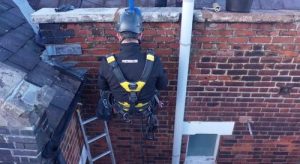
External seals around frames can separate, crack or be damaged during earlier work. Replacement must distinguish the weather seal from internal finishing or glazing seals.
Panel joints can be part of a larger drained or sealed façade system. The original design and manufacturer requirements should be considered before changing the detail.
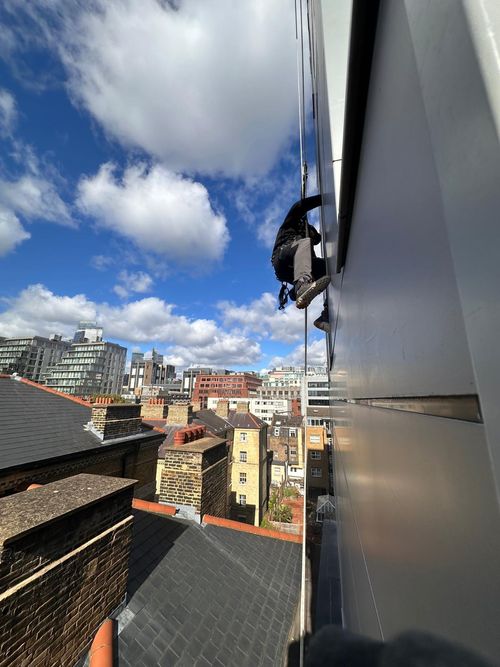
Exposed roof-edge interfaces experience strong weather and temperature changes. Sealant failure may interact with flashings, mortar and roofing systems.
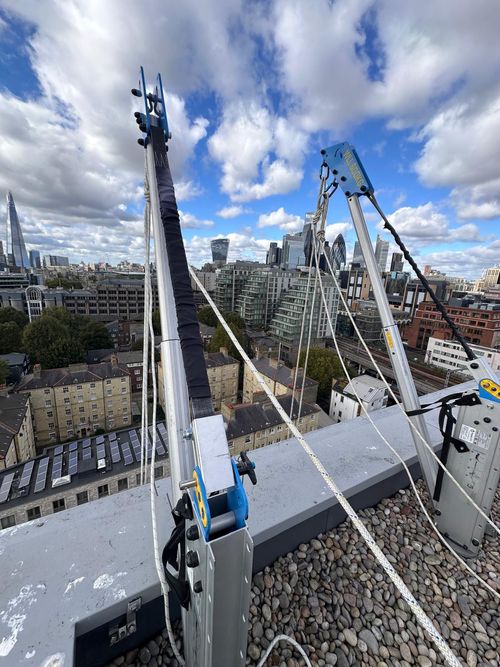
Pipes, cables and vents can create external joints. Competence responsibilities are agreed where specialist mechanical or electrical services are involved.
Small isolated defects can sometimes be replaced locally, but the repair boundary must be sound. Joining new sealant to aged material may create another weak point.
Where agreed, images document failed joints, preparation and completed work. They are valuable for inaccessible elevations and facilities records.
Large buildings may contain hundreds of similar joints installed at the same time. If failure is widespread, a planned elevation-by-elevation programme can be more useful than repeated isolated callouts.
Ropeguys can help define accessible joint groups, photographic records and practical work sequencing. The client or façade consultant remains responsible for any specialist system design, testing regime or formal performance specification.
Frame repairs, panel replacement, masonry work and external redecoration can disturb nearby seals. Joint replacement should be sequenced after the relevant substrate work and before final finishes where appropriate.
Internal links between services help keep responsibility clear: damaged masonry belongs within the rope access brick repair scope, while failed mortar belongs within brick repointing.
Technicians can inspect adhesion, joint geometry and surrounding substrate from the work position.
Rope access can suit isolated joints and selected elevations where full scaffold would be disproportionate.
The method can reduce occupation of pavements, courtyards and entrances, while still requiring controlled areas below.
Work can be coordinated around occupants and deliveries, subject to access, odour, noise and exclusion controls.
An investigation visit can identify joint condition before a larger replacement programme is approved.
Scaffold may suit extensive façade renewal, broad substrate repairs and high-volume material handling. Powered access may suit elevations reachable from stable ground.
Send the postcode, elevation photographs, close joint images and details of any water ingress or previous repairs.
We assess rope arrangements, joint locations, public areas, substrate condition and likely replacement quantity.
The quotation defines joints, removal, preparation, backing material where required, primer assumptions and replacement product. Specialist façade systems may require a consultant or manufacturer specification.
The scope also identifies termination points, because stopping in the middle of an aged joint can leave a vulnerable connection between new and old material. Where only a local repair is requested, the client is informed about this limitation.
Keys, permits, working hours, exclusion areas, tools, material handling, weather and rescue arrangements are coordinated.
Defective sealant is cut out carefully. Remaining residues are removed as far as the agreed method requires without unnecessary substrate damage.
Joint faces are cleaned and allowed to reach suitable application condition. Backing material and bond-breaking details may be installed where specified.
Preparation can take longer than final application. Old residues, damaged coatings, crumbling mortar or corrosion can prevent reliable adhesion and may require a revised scope. New sealant is not installed over an unsuitable substrate merely to preserve the original programme.
Required primer is applied according to the system. Sealant is installed to the agreed geometry and tooled to create consistent contact and finish.
Rain, moisture and temperature affect adhesion and curing. Work may be postponed where conditions are unsuitable.
Photographs can record preparation and finished joints. Unexpected substrate defects are reported separately.
Where practical, the records identify the relevant elevation or joint group. This makes later maintenance comparisons more useful than a collection of unlabelled close-up images.
Ropeguys publicly identifies Ionut Caimac and Zoltan Abraham as IRATA Level 3 Supervisors with 18 and 15 years of stated experience.
We do not present a surface bead over failed material as equivalent to proper joint preparation.
Ropeguys also provides cladding cleaning, external redecoration and rope access maintenance.
We distinguish confirmed joint failure from wider water-ingress problems and recommend investigation when needed.
The website uses genuine Ropeguys high-level façade photographs without inventing clients or outcomes.
Images help managers review joints that are invisible from the ground.
Window and panel joints can be renewed around occupied building operations.
Apartment buildings often contain inaccessible window perimeters, balconies, parapets and courtyard joints.
Work can be coordinated around guests, entrances and appearance standards.
Busy frontages require careful control of public routes and communication.
Restricted working periods and site procedures are agreed before mobilisation.
System-specific joints may require original design information, specialist testing or manufacturer guidance.
Hospitals, clinics and other sensitive premises may require careful coordination of access, odour, curing products and working periods. Site requirements must be provided before quotation so the proposed method can be assessed.
Large elevations can include panel joints, penetrations and roof-edge seals exposed to wind and thermal movement. Rope access may suit selected areas, while extensive joint renewal may favour another access system.
These examples use genuine Ropeguys project imagery. Exact addresses and client identities are not published.
Images show technicians positioned beside high-level façade interfaces, allowing adhesion and surrounding condition to be observed closely.
Project photography demonstrates access to difficult window surrounds and panel junctions on London buildings.
High-level imagery shows why sealant, masonry, flashings and coatings must be identified separately before repair.
Photographs can demonstrate location, visible adhesion failure, preparation and final appearance. They cannot by themselves prove concealed façade construction, product compatibility or long-term watertightness. Ropeguys uses images as evidence within the agreed visual scope rather than as an unsupported guarantee.
Ropeguys is based at 10 Florence Road, Kingston upon Thames, KT2 6JW, and works throughout Greater London.
Areas include Kingston, Richmond, Twickenham, Wimbledon, Putney, Wandsworth, Chelsea, Kensington, Hammersmith, Fulham, Westminster, Lambeth, Southwark, Croydon, Ealing, Brent, Camden, Islington, Hackney, Tower Hamlets and Greenwich.
Learn more about Ropeguys, visit Rope Access London or use the homepage quote form.
It is removal of failed joint material, preparation of the joint faces and installation of a compatible new weather seal.
Yes, where suitable rope arrangements and working positions can be established.
Proper replacement normally requires defective material to be removed. An overlay should only be used when specifically designed.
Age, movement, ultraviolet exposure, moisture, contamination, poor preparation, incorrect geometry and incompatible materials can contribute.
It can address a confirmed failed joint, but water may enter elsewhere. Complex leaks require investigation.
Yes, suitable external weather seals can be replaced within an agreed scope.
Yes, where the façade design, material specification and access are suitable.
It is a compressible backing material used to control sealant depth and support appropriate joint geometry.
No. Primer requirements depend on the product and substrate and should follow the specified system.
Available colours can be selected, but exact matching to aged material or adjacent finishes may not be possible.
Yes. Rain, surface moisture and temperature can affect adhesion and curing.
Yes, subject to site controls, access and communication with the building contact.
Photographic records can be included where practical and agreed.
Ropeguys publicly identifies two experienced IRATA Level 3 Supervisors.
Call 07909 983036, email info@ropeguys.co.uk, send a WhatsApp message or complete the form below.
Send the property postcode, joint photographs, building height and details of any water ingress or previous repairs.
We will assess whether rope access is appropriate and provide a written scope covering removal, preparation and replacement.
Include the postcode, approximate height and photographs where possible.